A) generate intense lightning storms.
B) change the atmosphere from oxidizing to reducing.
C) make it easier to maintain reduced molecules.
D) cause iron in ocean water and terrestrial rocks to rust (oxidize) .
E) prevent the formation of an ozone layer.
G) All of the above
Correct Answer

verified
Correct Answer
verified
A) wings
B) balancing organs
C) mouthparts
D) thoraxes
E) walking appendages
G) A) and E)
Correct Answer
verified
Correct Answer
verified
A) natural selection.
B) sexual selection.
C) species selection.
D) goal direction in evolution.
E) directed selection.
G) A) and C)
Correct Answer
verified
Correct Answer
verified
A) the ability to synthesize enzymes
B) a surrounding membrane or membrane-like structure
C) RNA genes
D) the ability to replicate RNA
F) A) and D)
Correct Answer
verified
Correct Answer
verified
A) natural selection cannot account for the rise of the prokaryotic flagellum.
B) ancestral versions of this protein assemblage were either less functional or had different functions than modern prokaryotic flagella.
C) scientists should accept the conclusion that neither eyes nor flagella could have arisen by evolution.
D) we can conclude that both of these structures must have arisen through the direct action of an "intelligent designer."
F) None of the above
Correct Answer
verified
Correct Answer
verified
A) Only early Earth was intensely bombarded by large space debris.
B) Only early Earth had an oxidizing atmosphere.
C) Less ultraviolet radiation penetrated early Earth's atmosphere.
D) Early Earth's atmosphere had significant quantities of ozone.
F) A) and C)
Correct Answer
verified
Correct Answer
verified
A) A
B) B
C) C
D) D
E) E
G) C) and E)
Correct Answer
verified
Correct Answer
verified
A) have genomes that are still similar enough for successful meiosis to occur in hybrid flies.
B) have more genetic similarity with each other than either did with the other two species.
C) may fuse into a single species if their hybrids remain fertile over the course of many generations.
D) Three of the above statements are correct.
E) Two of the statements above are correct.
G) A) and D)
Correct Answer
verified
Correct Answer
verified
A) It is a good example of punctuated equilibrium.
B) It shows that mammals and birds evolved from the same kind of dinosaur.
C) It includes transitional forms with progressively specialized teeth.
D) It indicates that mammals and dinosaurs did not overlap in geologic time.
E) It includes a series that shows the gradual change of scales into fur.
G) B) and E)
Correct Answer
verified
Correct Answer
verified
A) 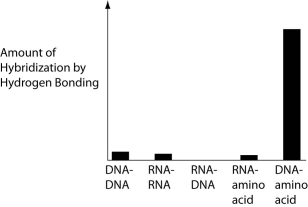
B) 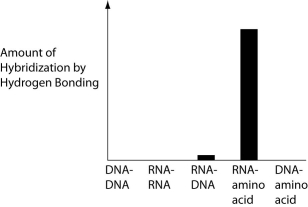
C) 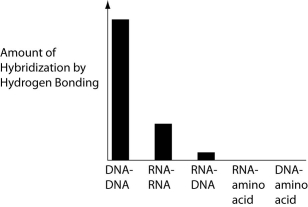
D) 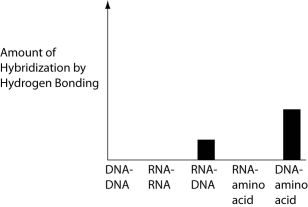
F) B) and C)
Correct Answer
verified
Correct Answer
verified
A) vacant ecological niches
B) genetic drift
C) colonization of an isolated region that contains suitable habitat and few competitor species
D) evolutionary innovation
E) an adaptive radiation in a group of organisms (such as plants) that another group uses as food
G) C) and D)
Correct Answer
verified
Correct Answer
verified
A) a snowball Earth.
B) earlier genetic systems than those based on DNA.
C) the abiotic synthesis of organic monomers.
D) the delivery of organic matter to Earth by meteors and comets.
E) the endosymbiotic origin of mitochondria and chloroplasts.
G) B) and D)
Correct Answer
verified
Correct Answer
verified
A) B only
B) C only
C) D only
D) B and C
E) C and D
G) A) and C)
Correct Answer
verified
Correct Answer
verified
A) allometric growth.
B) paedomorphosis.
C) sympatric speciation.
D) adaptive radiation.
E) changes in homeotic genes.
G) A) and C)
Correct Answer
verified
Correct Answer
verified
A) I only
B) I and IV
C) I, III, and IV
D) II and V
E) II, III and V
G) B) and C)
Correct Answer
verified
Correct Answer
verified
A) an evolutionary trend.
B) exaptation.
C) changes in Hox gene expression.
D) paedomorphosis.
E) adaptive radiation.
G) A) and B)
Correct Answer
verified
Correct Answer
verified
A) 1, 2, and 3
B) 1, 2, and 5
C) 1, 2, 3, and 4
D) 1, 2, 4, and 5
E) 2, 3, 4, and 5
G) A) and E)
Correct Answer
verified
Correct Answer
verified
A) These genes are fundamental, and are expressed in all cells of the organism.
B) The organism must have multiple paired appendages along the length of its body.
C) The organism has the genetic potential to have a relatively complex anatomy.
D) Most of its Hox genes owe their existence to gene fusion events.
E) Its Hox genes cooperate to bring about sexual maturity at the proper stage of development.
G) A) and C)
Correct Answer
verified
Correct Answer
verified
A) synthesis of small RNA polymers by ribozymes
B) abiotic synthesis of polypeptides
C) formation of molecular aggregates with selectively permeable membranes
D) formation of protocells that use DNA to direct the polymerization of amino acids
E) abiotic synthesis of organic molecules
G) C) and D)
Correct Answer
verified
Correct Answer
verified
A) an innovation among the dicynodonts that allowed them to fill brand-new niches.
B) the availability of previously occupied niches.
C) the extinction of the dinosaurs (except the birds) .
D) their outcompetition of many other terrestrial organisms.
F) A) and B)
Correct Answer
verified
Correct Answer
verified
Showing 41 - 60 of 75
Related Exams