A) A
B) B
C) C
D) D
F) All of the above
Correct Answer

verified
B
Correct Answer
verified
A) Only one of these statements is true.
B) Two of these statements are true.
C) Three of these statements are true.
D) Four of these statements are true.
E) All five of these statements are true.
G) A) and D)
Correct Answer
verified
Correct Answer
verified
A) 0.36
B) 0.64
C) 0.75
D) 0.80
F) B) and D)
Correct Answer
verified
D
Correct Answer
verified
A) It represents the result of selection for acquired characteristics.
B) It is synonymous with the process of gene flow.
C) It is the descent of humans from the present-day great apes.
D) It is the differential survival and reproduction of the most-fit phenotypes.
F) All of the above
Correct Answer
verified
Correct Answer
verified
A) alleles
B) loci
C) gene pools
D) species
E) individuals
G) B) and E)
Correct Answer
verified
Correct Answer
verified
A) using a series of NAs, one at a time, and changed about once a week
B) using a single PI, but slowly increasing the dosage over the course of a week
C) using high doses of NA and a PI at the same time for a period not to exceed one day
D) using moderate doses of NA and two different PIs at the same time for several months
F) A) and C)
Correct Answer
verified
D
Correct Answer
verified
A) 23%.
B) 46%.
C) 54%.
D) There is not enough information to say.
F) B) and C)
Correct Answer
verified
Correct Answer
verified
A) Alleles that promote more efficient acquisition of carotenoid-containing foods by males should increase over the course of generations.
B) Alleles that promote more effective deposition of carotenoid pigments in the feathers of males should increase over the course of generations.
C) There should be directional selection for bright red feathers in males.
D) Three of the statements are correct.
E) Two of the statements are correct.
G) C) and D)
Correct Answer
verified
Correct Answer
verified
A) genetic bottleneck.
B) sexual selection.
C) habitat differentiation.
D) founder effect.
F) C) and D)
Correct Answer
verified
Correct Answer
verified
A) 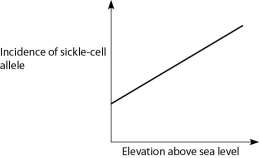
B) 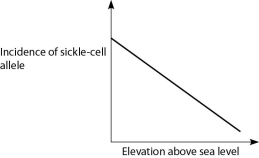
C) 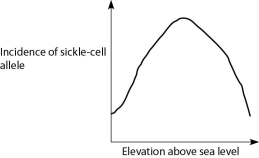
D) 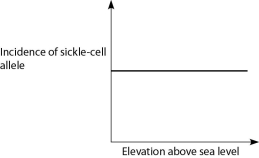
F) A) and B)
Correct Answer
verified
Correct Answer
verified
A) It is created by the direct action of natural selection.
B) It arises in response to changes in the environment.
C) It must be present in a population before natural selection can act upon the population.
D) It tends to be reduced by the processes involved when diploid organisms produce gametes.
E) A population that has a higher average heterozygosity has less genetic variation than one with a lower average heterozygosity.
G) All of the above
Correct Answer
verified
Correct Answer
verified
A) genetic drift.
B) gene flow.
C) disruptive selection.
D) nonrandom mating.
E) directional selection.
G) None of the above
Correct Answer
verified
Correct Answer
verified
A) 0.09
B) 0.49
C) 0.9
D) 9.0
E) 49.0
G) D) and E)
Correct Answer
verified
Correct Answer
verified
A) frequency-dependent selection.
B) evolutionary imbalance.
C) heterozygote advantage.
D) neutral variation.
E) genetic variation being preserved by diploidy.
G) B) and E)
Correct Answer
verified
Correct Answer
verified
A) average heterozygosity
B) nucleotide variability
C) geographic variability
D) average number of loci
F) B) and D)
Correct Answer
verified
Correct Answer
verified
A) the allele's frequency should not change from one generation to the next, but its representation in homozygous and heterozygous genotypes may change.
B) natural selection, gene flow, and genetic drift are acting equally to change an allele's frequency.
C) this means that, at this locus, two alleles are present in equal proportions.
D) the population itself is not evolving, but individuals within the population may be evolving.
F) B) and D)
Correct Answer
verified
Correct Answer
verified
A) The proportions of both types of homozygote should decrease.
B) The proportion of the population that is heterozygous at this locus should remain constant.
C) The population's average heterozygosity should decrease.
D) The two homozygotes should decrease at different rates.
F) A) and B)
Correct Answer
verified
Correct Answer
verified
A) Methylated DNA should become fixed in the gene pools of bacterial species.
B) Nonmethylated DNA should become fixed in the gene pools of bacteriophages.
C) Methylated DNA should become fixed in the gene pools of bacteriophages.
D) Methylated and nonmethylated strains should be maintained among both bacteria and bacteriophages, with ratios that vary over time.
E) Both the first and second responses are correct.
G) A) and B)
Correct Answer
verified
Correct Answer
verified
A) 0.05
B) 0.25
C) 0.50
D) 0.75
F) C) and D)
Correct Answer
verified
Correct Answer
verified
A) 0.04
B) 0.16
C) 0.20
D) 0.32
E) 0.80
G) None of the above
Correct Answer
verified
Correct Answer
verified
Showing 1 - 20 of 69
Related Exams